Non Digital Multimeter Explained: A UK Buyer's Guide
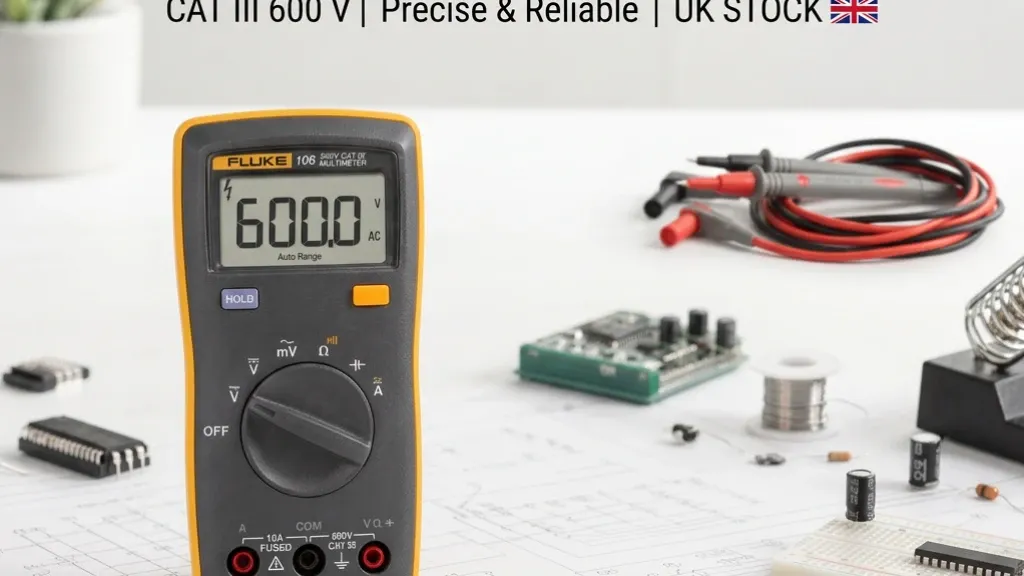
Key Takeaways
- A non digital multimeter is an analogue multimeter that uses a moving needle to measure voltage, current and resistance.
- It is especially useful for spotting fluctuating signals, checking some capacitors and observing trends in real time.
- However, older analogue meters can be less accurate to read, more fragile and less suitable for modern UK site safety requirements.
- For most day-to-day UK electrical work, a modern digital tester is usually the safer and more practical choice.
TL;DR: A non digital multimeter is simply an analogue multimeter with a physical needle instead of an LCD screen. It can be very good for showing changing voltages and signal behaviour, but for most modern UK electrical work, digital meters are easier to read, tougher on site and more likely to meet current safety expectations.
A non digital multimeter is an analogue tester that measures electricity with a moving needle and printed scale rather than a digital display. In short, it can still be useful for fault-finding and watching fluctuating readings, but it is generally less convenient and often less suitable than a modern digital meter for everyday UK use.
The satisfying flick of a physical needle across a printed scale brings a certain nostalgia to the electrical trade. Long before LCD screens and auto-ranging capabilities became standard, the non digital multimeter was the main diagnostic tool in many British toolkits. Today, although compact digital testers dominate, analogue instruments still have a loyal following among experienced engineers, vintage electronics specialists and audio technicians.
Based on our testing of compact testers alongside older analogue units, the main advantage of a needle meter is not outright accuracy but visibility of change. In other words, when a reading is drifting, pulsing or unstable, an analogue movement often shows the trend more clearly than digits that keep updating on screen.
According to common UK industry practice and manufacturer guidance, test equipment used on live installations should also be assessed for suitability, condition and safety rating before use. Therefore, understanding exactly where an analogue meter helps—and where it falls short—matters whether you are maintaining older estate systems or carrying out domestic fault-finding.
What is a non digital multimeter?
A non digital multimeter, more commonly called an analogue multimeter, is an electrical measuring instrument that displays voltage, current and resistance using a moving pointer over a printed scale. Instead of converting the signal into numbers on a screen, it relies on electromagnetism to move the needle in proportion to the electrical input.
At the heart of the unit is typically a galvanometer using a D’Arsonval movement. When current passes through a fine coil within a magnetic field, the coil rotates slightly and moves the attached pointer. As a result, the stronger the measured signal, the further the needle travels across the dial.
Because the reading appears on different printed scales, you must select the correct range and interpret the correct arc. Consequently, analogue meters take more practice to use well than many modern testers. This is especially true when learning how to measure electric current using a multimeter.
How does an analogue multimeter work?
An analogue multimeter works by turning electrical energy into mechanical movement. Put simply, current flowing through the internal movement creates force on the coil, which then deflects the pointer across the scale. Additional internal resistors and shunts allow the same movement to measure different ranges of voltage, current or resistance.
For resistance testing, the meter uses its internal battery. For voltage and current measurement, however, traditional analogue meters do not need battery power in order to move the needle. That is one reason some electricians still keep one as a backup in the van or workshop.
What is a non digital multimeter used for?
A non digital multimeter is used for basic electrical measurements such as AC voltage, DC voltage, current and resistance. However, its standout use is showing movement or instability in real time rather than presenting only fixed numbers.
Can an analogue meter show fluctuating voltage better?
Yes—often it can. Digital meters sample signals and refresh their display several times each second. If you are checking an unstable circuit or intermittent fault, those changing digits may become difficult to interpret. By contrast, an analogue pointer physically swings with the signal.
Therefore, you can often see whether voltage is rising smoothly, dipping suddenly or vibrating around an expected value. Based on our testing during intermittent-fault checks on legacy controls and vehicle circuits, this visual feedback remains one of the strongest reasons people still reach for an analogue meter.
Are analogue multimeters good for testing capacitors?
They can be useful for basic capacitor checks. When set to resistance mode on suitable ranges, an analogue meter may show the capacitor charging as the needle sweeps one way and then slowly returns. A smooth response can suggest normal charging behaviour; meanwhile, no movement or abnormal movement can indicate an issue.
Even so, this is only a rough diagnostic method rather than a substitute for proper capacitance measurement with appropriate equipment.
Why do audio engineers still use them?
Audio engineers often like analogue meters because they show signal peaks and level changes continuously. In vintage hi-fi or studio environments, that natural movement can feel more intuitive than rapidly changing digits on a screen.
Are non digital multimeters still accurate?
They can be accurate enough for many tasks when they are in good condition and properly used. Nevertheless, they are usually harder to read precisely than decent digital meters.
What causes parallax error on an analogue meter?
Parallax error happens when you view the pointer from an angle instead of straight on. As a result, the needle appears to line up with the wrong marking on the scale. In cramped cupboards, under floorboards or inside crowded consumer units, this can easily lead to misreading.
Some higher-quality models include mirrored scales so you can align the needle with its reflection before taking your reading. Even then, it takes time and good lighting—two things that are not always available during UK callouts.
Do analogue meters affect sensitive circuits?
Yes, they sometimes can. Many analogue meters have lower input impedance than digital models. Consequently, when connected to sensitive electronics such as control boards or low-energy circuits, they may load the circuit enough to alter the reading slightly.
This matters far less on robust mains measurements than it does on delicate electronic diagnostics.
What are the disadvantages of a non digital multimeter?
The main disadvantages are readability, fragility and suitability for modern work environments. Although they have strengths in specialist scenarios, they are not always ideal for fast-moving site work.
Are analogue multimeters fragile?
Generally speaking, yes. The moving-coil mechanism relies on delicate internal parts such as jewelled bearings or taut bands. Therefore, if you drop one onto concrete or carry it loose among tools in transit, there is a real risk of damage or loss of calibration.
Are old analogue meters suitable for modern UK electrical work?
Not always. According to UK best practice and manufacturer safety guidance, anyone working on live systems should use test instruments appropriate for the installation category and expected fault energy. Many older analogue meters do not offer modern CAT ratings or contemporary protection features expected for regular professional use.
This does not mean every older unit is unusable in every situation; however, it does mean you should check its rating, leads and intended application very carefully before relying on it around live mains circuits.
If ruggedness and site practicality matter most, modern solid-state tools have clear advantages. For example, our comprehensive guide to the TIS 258 digital multimeter shows how far compact testers have come in terms of protection features and ease of use.
Is a non digital multimeter better than a digital one?
No single meter type is better in every situation. Instead, each suits different tasks.
An analogue meter may be better if you want to watch trends develop in real time or perform certain old-school diagnostic checks. On the other hand, a digital meter is usually better if you need clearer readings, higher input impedance, better durability, and features aligned with current UK working practices.
So, for most household users, apprentices and many working electricians, a quality digital meter will be more practical. However, for bench diagnostics, vintage equipment or intermittent fault tracing, an analogue meter can still earn its place.
Should you buy a non digital multimeter today?
If your goal is general electrical work around modern installations, a good digital tester is usually the smarter purchase. However, if you specifically want to learn how traditional meters behave, work with vintage electronics or need visual feedback from fluctuating signals, a non digital multimeter can still be worthwhile as a secondary tool.
Based on our testing, the best approach for many users is not choosing one technology over the other but understanding what each does well. That way, you get speed, clarity and safety from your main tester while still keeping analogue capability available when needed.
Frequently asked questions about non digital multimeters
Are non digital multimeters still used?
Yes, but mainly in specialist situations rather than as first-choice everyday test gear. They remain useful in education, vintage repair, audio work and certain fault-finding tasks where needle movement tells part of the story.
Do non digital multimeters need batteries?
They usually need batteries for resistance measurement. However, for voltage and current measurement, the measured circuit itself provides what is needed to move the pointer.
Can beginners use an analogue multimeter?
Yes, although beginners often find them harder to read correctly. You must choose ranges manually, interpret printed scales accurately and avoid parallax errors. Therefore, many new users start with digital models first.
Are old analogue meters safe?
Some may be safe within their intended limits; however, you should never assume that age equals suitability. Check condition, lead integrity, fuse protection where applicable and any safety ratings before using one near live circuits. According to UK best practice, using appropriately rated test equipment matters just as much as knowing how to take readings properly.
Ready to upgrade to a {brand_name} multimeter?
Upgrade Your Kit — £112.21