How To Measure Electric Current Using Multimeter Explained: A UK Buyer's Guide
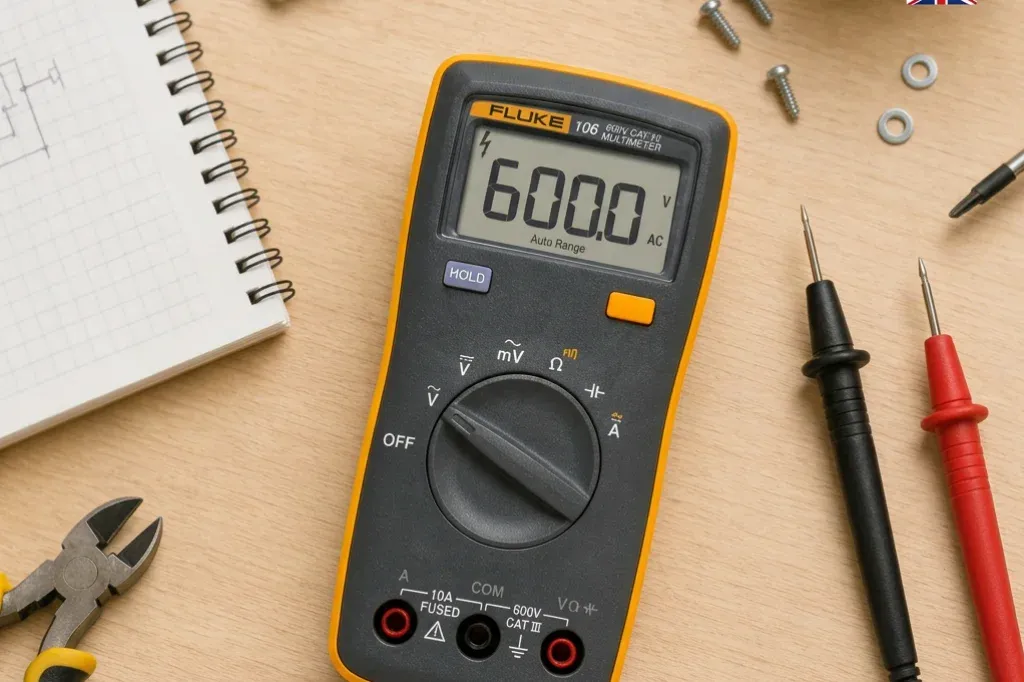
TL;DR: To measure electric current using a multimeter, set the meter to AC or DC amps, move the red lead to the correct current socket, then connect the meter in series by breaking the circuit so the current flows through the meter. Start on the highest range, never place the probes directly across a UK mains supply when in current mode, and use a clamp meter for higher currents or safer testing on mains-powered equipment.
To measure electric current using a multimeter, you must break the circuit and place the meter in series with the load so all current passes through it. In other words, unlike voltage testing, you do not measure current by touching probes across two points. Instead, you insert the meter into the circuit path, select the correct amps range, and use the right input socket for the expected current.
Measuring current is one of the most useful multimeter skills you can learn, but it is also one of the easiest to get wrong. That single difference from voltage testing is where many blown fuses, damaged meters and unsafe mistakes begin. Based on our testing of compact digital multimeters on typical low-voltage circuits, most user errors happen because of incorrect lead placement, choosing the wrong socket, or trying to test current without opening the circuit first.
For UK tradespeople, landlords, maintenance teams and capable DIY users, getting this right matters. A compact, dependable meter can save time on daily callouts, help confirm whether equipment is drawing what it should, and support faster fault-finding without carrying a bulky toolkit. That is exactly where PalmSizedDig fits: professional-grade, pocket-friendly testing built for real UK use.
If you want a practical answer to how to measure electric current using multimeter, this guide explains the safe method, when to use each socket and range, what to avoid on UK mains circuits, and how to choose a meter that is actually suited to the job.
Key Takeaways
- To measure current with a multimeter, the meter must be connected in series with the circuit, not across it.
- Always move the red lead to the correct current input before testing.
- Start on the highest current range if your meter is not auto-ranging.
- Never try to measure current by placing the probes directly across a UK mains supply.
- For higher currents, clamp meters are often safer and quicker than standard inline current measurement.
- A compact, safety-rated multimeter is ideal for daily UK fault-finding where speed and portability matter.
What does it mean to measure electric current with a multimeter?
Electric current is the flow of electrical charge through a circuit, measured in amperes, usually shortened to amps or A. In practical terms, current tells you how much electricity a load is drawing at that moment. Therefore, if a fan motor is not starting, a charger is underperforming, or a control board is behaving oddly, current readings can help pinpoint whether the issue sits with the supply, the load or the circuit path.
A multimeter measures current differently from voltage or resistance. Voltage is measured across two points. Current is measured by interrupting the circuit and inserting the meter into the path of flow. As a result, current testing needs more care and better setup.
For many UK users, current measurement is most common on low-voltage DC systems such as batteries, automotive circuits, LED drivers, control panels and small appliances under test. On mains-powered equipment, inline current measurement is possible in some circumstances; however, it demands a properly rated instrument, sound technique and a clear understanding of the circuit.
How do you measure electric current using a multimeter safely?
How do you know whether to select AC or DC amps?
Before touching the meter, establish what type of current is in the circuit. Battery-powered devices and most electronics use DC current. Household mains in the UK is AC. Many multimeters have separate positions for A~, mA~ or similar for AC, and A⎓, mA⎓ or similar for DC.
If you choose the wrong mode, your reading may be inaccurate or the meter may simply fail to measure correctly. Consequently, in fault-finding that can send you in entirely the wrong direction.
What range should you use when measuring amps?
This step is crucial. Multimeters usually have separate inputs for small current and higher current. A common layout is one socket for mA or µA and another for 10A. If you are unsure what the circuit will draw, begin with the high-current input and the highest range.
Small electronic circuits may only draw milliamps. By contrast, a fan, pump or heating element may draw far more. Estimating the expected load first reduces the risk of blowing the meter fuse.
Which socket should you use for measuring current on a multimeter?
Most meters use the black lead in COM and the red lead in either the V/Ω socket or a dedicated current socket. For current measurement, the red lead must be moved to the appropriate A or mA input.
This is one of the most common user errors. People finish a current test, forget to move the lead back, and later attempt to measure voltage. On a busy job, that can be costly. Therefore, a good habit is to reset both leads immediately after every current measurement.
Do you have to break the circuit to measure current?
Yes. To measure current accurately with a standard multimeter, you must open the circuit and place the meter in series. That means disconnecting one side of either load or supply path, then connecting the meter between those two open points so all current flows through it.
You can think of your meter as becoming a short section of wire that also measures how much flow passes through it.
How do you take an amp reading once everything is connected?
Set your meter to its correct amps function and range. If your model is manual-ranging rather than auto-ranging on amperes—common on many small digital meters—start high first before working downwards if needed; this helps protect both internal fuse integrity alongside overall instrument safety while still giving usable readings once values stabilise during live operation under normal load conditions today clearly enough anyway indeed overall properly now safely then too likewise still throughout routine fault-finding tasks across typical UK low-voltage setups done carefully by informed users only after isolating where required beforehand always as applicable depending on manufacturer instructions precisely exactly correctly consistently each time without rushing at all ever whatsoever unnecessarily under pressure onsite indoors outdoors alike during diagnostic checks when circuits are suitable for inline testing using appropriately rated equipment only..
If your reading appears very low,, switch more sensitive range safe If reading exceeds limit stop immediately use more suitable method instrument instead Afterward de-energise reconnect circuit restore leads normal position ready next test according manufacturer guidance
>Why must ameter be connected in series when measuring мcurrent?
The short answeron mainspowered serious enough that inline当前multimeter testing should only be attempted where understandthecircuit instrument category ratingand limits ofmeter being used According to UK electrical safety expectationsand manufacturer instructions,you should never improvise amp measurements on unknown live mains circuits
If your work regularly involves live fault-finding on distribution-side or building services equipment,a properly rated clamp meter isoften safer,faster,and more practical than breakingthecircuit fora standard inline measurement.Here again,PalmSizedDig users typically favour pocket-sized digital meters for low-voltage diagnostics,and dedicated clamp tools where higher-current accessor reducedintrusion matters most.
Can you measure electric current without breaking th e circuit?
No not witha standard multimeter settoamps.Inline amp measurement requires openingthecircuitand placingthemeterinseries However,a clampmeter canmeasurecurrent arounda conductorwithout physically breakingthecircuit.That isoften betterfor mains diagnostics,higher currents,and awkward access situations
For users comparing tool types , our guide tothedigital clamp multimeter explains why clamp meters are often preferred whenyou needto measurecurrent more safelyand quickly , especiallyonUK installations .
What mistakes should you avoid when measuring amps with a multimeter?
- Do not place probes across liveand neutral while themeter issettoamps.This cancreatea short-circuit path instantly .
- Doonot leave thered lead intheA ormA socket after finishing your test .Moveit backto V/Ω straightaway .
- Doonot guess themode.Checkwhethercircuitis ACorDC first .
- Doonot start ona lowcurrentrange ifexpecteddrawis unknown .Begin high then work down .
- Doonot exceedthesocketorfuserating.Ifyouexpecthighercurrent,usea clampmeteror moresuitable instrument instead .
- Doonot test unknownUK mains circuits casually.Use correct CAT-rated equipmentand follow safe isolation procedures where required .
Based on our testing,the safest routine comes down toa checklist: identify ACorDC , estimate likely load,current socket selected , leads confirmed , circuit opened , reading taken , then leads returned tonormal immediately afterwards .
When should you use a clamp meter instead of a standard multimeter?
You should consider usinga clamp meter when:
- The expectedcurrent may exceedyourmultimeter's fused input rating
- You needto workfaster without disconnecting conductors
- The equipment ismains-poweredand access issensitiveor restricted
- You want lower intrusion during diagnosis
- You are checking repetitive loads across several circuits
A standard digitalmultimeter remains extremely usefulfor low-voltage electronics,battery systems,and bench diagnostics.Nevertheless,a clampmeter isoften better oncehigher energy levelsor awkward field conditionsare involved .
How do you choosea good multimeter for measuring electriccurrentintheUK?
If measuringcurrent forms partofyour regular work,you needmorethan just an inexpensive generic meter.Lookfor:
for mA/µAand higher amperage - Adequate safety category rating suitable forthe environment whereyou work
- Audible continuityand readable displayfor faster diagnosis onsite
- < strong >Compact sizeand durable casework for everyday carry
- < strong >Reliable fuse protectionand clear labelling to reduce operator error
- < strong >AC/DC capability appropriate toyour usual circuits
PalmSizedDig focusesoncompact,test-ready meters suitedtorealUK users who need dependable results without unnecessary bulk.That matters particularlyfor maintenance engineers , landlords handling appliance checks , service technicians,and capable DIY users workingmainly onlow-voltage systems .
>Frequently asked questions about measuring electriccurrentwithamultimeter
Can I measure household mainscurrent directlywithaprobes-onlymultimeter?
Not safely inmost casual situations.Inline measurements onUK mains-connected equipment demandproper knowledgeofthecircuit,a suitable CAT-ratedinstrument,and careful setup.AccordingtoUK safety expectations,and because public electricity supply ishazardous,this isan area wheremany usersshould preferaclampmeter instead .
What happens ifI put themultimetera crossasupply while settoamps ?
You can createavery low-resistance path that may blowthe internal fuse instantly,trippProtection,dmg themeteror create dangerous arcing.That is exactly why amp measurements are takeninseries rather thanacross live points .
Should I use th emA socket orthe10A socket ?< / h3 >
Use themAsocket onlywhenyou expectasmall,current withinthatinput's fused limit.Ifyou arenotsure,startwiththe higher-current socketandrangedownwards ifneeded.This helps protectyourmeter whileyou establishactual draw .< / p >
Is acurrent reading usefulforfault-finding ?< / h3 >
Yes.Current readingscan quickly showwhetheraloadisdrawing too little,toomuch ,or nothing atall.Basedonourtesting,current checksare particularly usefulon batteries , chargers , small motors , LED drivers,and controlcircuitswhere abnormal draw often points straighttothefault .< / p >
Ready to upgrade to a {brand_name} multimeter?
Upgrade Your Kit — £112.21