Digital Clamp Multimeter Explained: A UK Buyer's Guide
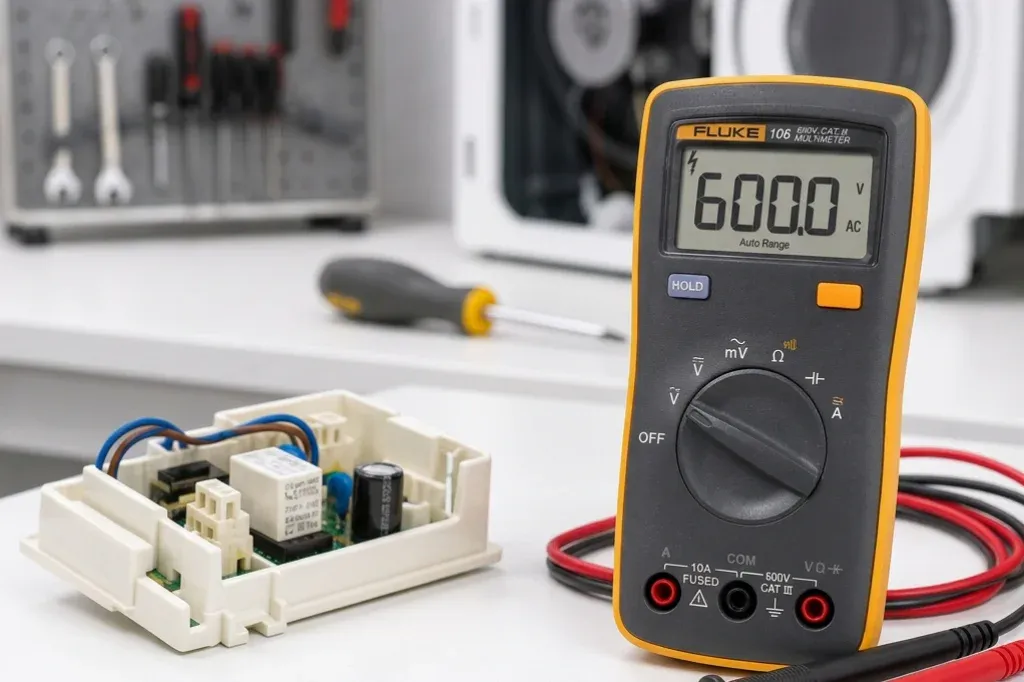
TL;DR: A digital clamp multimeter is a handheld tester that measures current by clamping around a single conductor, so you usually do not need to disconnect wiring. For UK electricians, maintenance engineers and capable DIY users, it is useful for quicker current checks, safer fault-finding and everyday voltage, continuity and resistance testing. Based on our testing of compact meters for real-world callouts, the best choice is one with an appropriate CAT rating, True RMS capability and a size you will genuinely carry.
A digital clamp multimeter is a multimeter with a clamp jaw that lets you measure current without breaking the circuit, while also handling common checks such as voltage, resistance and continuity. In practice, that makes it especially useful for UK fault-finding on consumer units, motors, HVAC equipment and distribution circuits where speed, safety and access matter.
A digital clamp multimeter earns its place in a tool bag when speed, safety and portability matter. For UK sparkies, maintenance engineers, facilities teams and serious DIY users, it solves a simple problem: how to measure current quickly without breaking the circuit, while still keeping core multimeter functions close at hand. As a result, it suits cramped consumer units, plant rooms, NHS maintenance rounds and domestic callouts where every minute counts.
PalmSizedDig is built around that same practical need. The site’s focus is simple: the ultimate palm sized multimeter and voltage tester multimeter, with professional-grade Fluke reliability in a compact, pocket-friendly design for fast fault-finding and daily UK callouts. This guide explains what a digital clamp multimeter is, when to choose one, what to look for in the UK market, and how to avoid buying the wrong meter for the jobs you actually do.
Key Takeaways
- A digital clamp multimeter measures current using a clamp jaw around a conductor, so you do not need to disconnect wiring for many tests.
- It is ideal for fault-finding on live circuits, tracing load issues, checking motors, HVAC systems and distribution boards.
- For UK users, safety ratings such as CAT III and CAT IV are not optional extras; they are central to choosing the right instrument.
- True RMS readings are valuable when testing modern electronic loads, variable speed drives and non-linear circuits.
- A compact meter often gets used more often. Pocket-friendly designs suit fast callouts, ladders, loft spaces and crowded panels.
- If you mainly need voltage, continuity and quick proving rather than frequent high-current checks, a palm-sized digital multimeter may be the better daily carry.
What is a digital clamp multimeter?
A digital clamp multimeter combines two jobs in one instrument. It works as a standard digital multimeter for measurements such as voltage, resistance and continuity, while also using a hinged clamp jaw to measure electrical current flowing through a single conductor. The jaw detects the magnetic field around the cable and converts it into a current reading on the display.
The main advantage is obvious once you have worked in live environments: there is often no need to break into the circuit just to check current draw. Instead of isolating conductors or inserting test leads in series, you clamp around one live conductor and read the result directly. Consequently, this can save time and reduce disturbance to equipment.
This makes the digital clamp multimeter particularly useful in commercial maintenance, industrial diagnostics, HVAC work and domestic inspection where current measurement is part of fault-finding rather than an occasional bench task.
What is a digital clamp multimeter used for?
In everyday UK work, a digital clamp multimeter is used to check how much current a circuit or appliance is drawing without disconnecting conductors. Therefore, it is commonly used for diagnosing overloaded circuits, confirming motor load, checking heating elements, tracing intermittent faults and comparing expected versus actual running current.
Why do UK tradespeople choose a digital clamp multimeter?
The appeal in Britain is practical rather than theoretical. On a wet Tuesday callout in Manchester or during planned maintenance on a London office block, nobody wants bulky gear that slows access or demands extra setup. A decent digital clamp multimeter gives quick answers where access is awkward and time on site is limited.
Is it safer for measuring current?
Current measurement with standard probes can be intrusive. A clamp function removes much of that hassle for many real-world checks. You still need correct safe isolation procedures where required under UK working practices; however, measuring around one conductor is often cleaner and faster than opening up circuits unnecessarily.
Is it useful for domestic as well as commercial work?
Yes. In homes, it helps identify overloaded circuits, appliance faults and unusual load patterns. In commercial buildings it supports checks on pumps, fans, compressors and lighting circuits. In healthcare estates such as NHS facilities, maintenance teams value instruments that minimise disruption while giving dependable readings during routine inspections or urgent diagnosis.
Does it reduce how many tools you carry?
If your van already contains enough kit to stock a branch counter, reducing duplication matters. A compact instrument that handles common meter functions plus current measurement cuts clutter without sacrificing capability. That fits neatly with PalmSizedDig’s wider approach: professional-grade reliability in a truly pocket-friendly format for everyday callouts.
How does a digital clamp multimeter work?
The jaw senses magnetic flux produced by alternating current flowing through a conductor. In AC mode this is straightforward for most clamp meters. Some advanced models also measure DC current using Hall effect sensors built into the clamp assembly.
The crucial point is that you normally clamp around one conductor only. If you place the jaw around twin-and-earth carrying outgoing and return current together, their magnetic fields cancel each other out and your reading will be wrong or near zero. In other words, if the meter shows little or no current when load should be present, check your clamping method first.
What functions does a digital clamp multimeter usually include?
- AC voltage measurement
- DC voltage measurement
- AC current via clamp jaw
- Resistance
- Continuity buzzer
- Diode test
- Sometimes capacitance, frequency or temperature
If you want to brush up on broader handheld meter features before deciding what type suits your work best, see The Ultimate Guide to Tis 258 Digital Multimeter in the UK. It gives helpful context on compact meter design and everyday use cases relevant to UK buyers.
Is a digital clamp multimeter better than a standard digital multimeter?
When is a clamp meter better?
A digital clamp multimeter comes into its own when current testing is part of routine diagnosis. For example, if you regularly inspect motors, immersion heaters, EV charging circuits under suitable conditions provided by competent persons, air conditioning units or board loads, the ability to capture amperage quickly is hard to beat.
When is a standard compact meter better?
If your daily tasks centre on proving dead (where appropriate dedicated test equipment may also be required), checking voltage presence with approved procedures in mind, continuity testing sockets or tracing basic faults in control circuits, then an ultra-compact digital multimeter may prove more useful because it slips into a pocket more easily and gets used more often.
This is where buying habits matter more than headline specs. Plenty of users purchase an oversized clamp meter then leave it in the van because it feels cumbersome on ladders or cramped service risers. As a result, palm-sized designs solve that problem by reducing friction between needing the tool and actually carrying it.
If you are comparing analogue-style options or trying to understand why digital displays have become standard for field work today, read alsoour older page may help? Wait. We must keep clean HTML only. Need fix malformed paragraph. Let's continue properly from there.
Ready to upgrade to a {brand_name} multimeter?
Upgrade Your Kit — £112.21